Compute Nodes and Their Role in Modern Processing Environments
It is common for people to imagine a lone powerful server performing all of the processing when they think of computer infrastructure. Although it might be effective for light workloads, contemporary applications often demand significantly more processing power than a single machine can effectively supply. Modern workloads frequently necessitate the coordinated efforts of numerous computers, such as those involved in cloud computing, scientific research, AI, and corporate analytics. Compute nodes are the technical names for these standalone computers.
In a distributed computing system, each server or computer is called a compute node. Its sole purpose is to handle computing workloads. To increase reliability, scalability, and performance, compute nodes usually collaborate with other nodes rather than operating independently. Learners can gain a deeper understanding of how large-scale systems handle increasing demand for fast and reliable services by learning about their role.
Compute Nodes: What Are They?
The execution of programs, processing of data, or computations is carried out by compute nodes, which can be either physical or virtual machines. The central processing unit (CPU), memory, and occasionally specialised hardware, such as graphics processing units (GPUs), are primarily used to provide processing power, rather than storage servers or networking equipment.
A compute node is not always the only node in its environment. When added to a cluster, its several nodes can handle tasks that would be too much for a single system to handle alone. For instance, rather than a single server handling thousands of client requests per second, multiple computing nodes can share the workload among themselves. This strategy improves overall responsiveness and reduces bottlenecks.
Why Compute Nodes Matter
Modern applications often experience changing workloads throughout the day. An online retailer may see increased traffic during a sale, while a research laboratory might process enormous datasets after collecting experimental results. Adding more compute nodes allows organizations to handle these growing demands without replacing existing infrastructure with a single, much larger server. This distributed approach provides several important benefits:
- Better performance through workload sharing.
- Improved scalability by adding new nodes as demand increases.
- Higher availability if one node becomes unavailable.
- More efficient resource utilization across multiple systems.
Instead of relying on one powerful computer, organizations build flexible environments that can grow gradually over time.
How Compute Nodes Work Together
Compute nodes rarely operate in isolation. They are typically interconnected via high-speed networks to facilitate communication and collaboration. A workload manager, scheduler, or orchestration system determines which nodes are best suited for processing tasks. Before tasks are assigned to the most appropriate machine, the system assesses available resources, including CPU usage, memory capacity, and storage space.
Imagine a customer submitting a video to a digital editing service. Instead of sending all processing tasks to a single server, the platform distributes different parts of the video across multiple compute nodes. Multiple users can edit the video simultaneously without having to wait for a single server to become available. Distributing the workload across various machines improves overall efficiency and reduces the load on individual nodes.
Types of Compute Nodes
Although every compute node performs processing functions, not all nodes are alike. Different workloads require different hardware configurations. General-purpose compute nodes are carefully designed to meet the needs of a variety of applications, such as websites, business software, and development platforms. They balance processing power, memory, and storage to handle everyday computing requirements. Memory-optimized nodes feature larger memory capacities and are frequently used for in-memory databases, analytics platforms, and applications that process large datasets.
Compute-optimized nodes prioritize processor efficiency, making them ideal for scientific calculations, simulations, and software compilation. GPU-equipped nodes integrate a graphics processing unit (GPU) alongside a traditional processor. Thanks to the parallel processing capabilities of GPUs, developers widely use these nodes in artificial intelligence, machine learning, video rendering, and complex image processing. Storage-oriented nodes combine computing power with large storage capacities, making them suitable for tasks that frequently process vast amounts of data. By selecting the right node type, you ensure that applications receive the necessary resources without incurring extra costs for redundant hardware.
Cloud Compute Nodes
Cloud platforms offer compute nodes for businesses of all sizes. Companies can spin up virtual compute nodes whenever additional processing power is required, without having to purchase physical servers. These virtual machines function similarly to physical servers but utilize shared hardware managed by cloud service providers.
If network traffic unexpectedly doubles, administrators can rapidly deploy additional compute nodes to meet the increased demand. Once traffic levels normalize, redundant nodes can be removed, helping to control operational expenses. This flexibility allows businesses to manage fluctuating workloads without incurring large investments in technology that would otherwise remain unused for most of the year.
The Relationship Between Compute Nodes and Clusters
The value of a compute node increases significantly when it becomes part of a cluster. A cluster consists of a group of interconnected computers working together as a single, larger system. Each node contributes processing power, and specialized software coordinates communication between the nodes.
In high-performance computing environments, hundreds or even thousands of compute nodes can collaborate to analyze weather patterns, simulate engineering designs, or conduct scientific research. Businesses also utilize clusters for web hosting, large-scale databases, data analytics, and enterprise applications that require uninterrupted access. Even if a user employs only a single application, multiple different compute nodes may still share the underlying workload.
Load Balancing and Resource Distribution
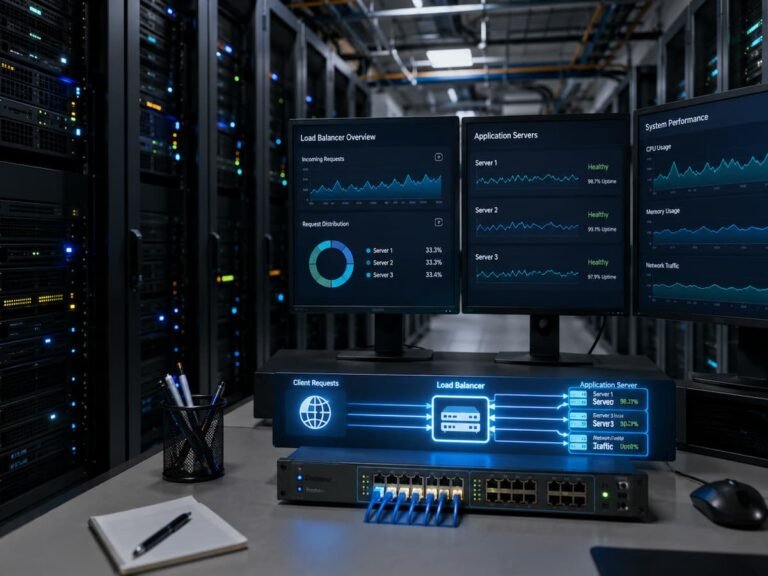
Efficient workload distribution is one of the primary responsibilities within environments that use compute nodes. Load balancers direct incoming requests toward available nodes, preventing one server from becoming overwhelmed while others remain idle. For example, during an online ticket sale, thousands of customers may access the website simultaneously. Instead of sending every request to one server, the load balancer distributes visitors across multiple compute nodes. This approach offers several advantages:
- Faster response times.
- Reduced risk of overload.
- Better use of available hardware.
- Improved reliability during periods of high demand.
Without effective load balancing, even powerful hardware can become a performance bottleneck.
Reliability Through Redundancy
A major advantage of multi-node computing is improved robustness. In traditional architectures, the failure of a single server can render an entire application inaccessible. In a cluster architecture, tasks can continue running on other nodes while administrators repair or replace the faulty system. This redundancy mechanism reduces downtime and helps ensure service availability.
However, redundancy alone is insufficient. Companies must still rely on backups, monitoring systems, and contingency plans to protect against major outages affecting multiple nodes or the entire infrastructure. Compute nodes enhance system resilience, but they represent only one component of a broader reliability framework.
Monitoring Compute Nodes
As the ecosystem grows, monitoring becomes increasingly important. Administrators must continuously monitor CPU usage, memory utilization, network throughput, storage efficiency, and the hardware status of all compute nodes. Monitoring helps identify potential issues before they impact users.
For instance, if a node consistently exhibits an extremely high CPU load while others show low utilization, administrators can review workload distribution or optimization routines before performance degrades. Automated alerts also notify the support team if a node becomes inaccessible, exceeds resource limits, or experiences hardware issues. Regular monitoring improves operational efficiency and long-term system reliability.
Key Challenges
Although compute nodes offer significant benefits, they also present management challenges. Managing multiple machines is far more complex than managing a single server. Software upgrades, security enhancements, hardware maintenance, monitoring, and task allocation must all be carefully managed to ensure stable and reliable performance.
Since compute nodes rely on rapid communication, networking is becoming increasingly important. Slow or unstable network connections can negate the benefits of distributed computing. Capacity planning presents another challenge. Companies must anticipate future workloads and add nodes before existing infrastructure reaches capacity limits, thereby avoiding unnecessary hardware purchases. Effective strategies and automation can mitigate these operational challenges.
Best Strategies for Managing Compute Nodes
An effective configuration follows practical principles that boost productivity and simplify management. Standardizing hardware and operating system configurations reduces compatibility issues and makes maintenance more predictable. Automated software deployment ensures that every node runs a consistent version of applications and security patches.
Continuous monitoring allows administrators to detect performance bottlenecks before they escalate into service disruptions. Capacity planning enables organizations to upgrade their infrastructure incrementally rather than reacting to unexpected demands. Finally, maintaining accurate records helps administrators understand node interactions, simplifying troubleshooting and future improvements.
Conclusion
Compute nodes are a crucial component of modern processing frameworks. By distributing tasks across multiple physical or virtual machines, organizations can enhance performance, scalability, and reliability while meeting the demands of applications that exceed the processing capacity of a single server.
The importance of these technologies is becoming increasingly evident as cloud computing, artificial intelligence, big data analytics, and enterprise applications demand greater computing power. Understanding how compute nodes operate, how they collaborate within clusters, and the role they play in building resilient infrastructure provides a solid foundation for learning about modern computer systems. Compute nodes should essentially be viewed as integral members of a collaborative team rather than merely as additional servers. Together, these nodes build the adaptive, scalable, and reliable digital services upon which businesses and individuals increasingly rely.
FAQs
1. What are the primary applications of compute nodes?
Compute nodes provide processing resources for workloads in large computing environments. They utilize components such as processors, memory, and specialized hardware to run applications, process data, and perform calculations. In a cluster environment, multiple compute nodes work together to handle tasks that a single machine cannot perform.
2. Are compute nodes the same as standard servers?
Technically, a compute node is a type of server, but the term usually describes its role rather than its physical form. Standard servers can perform a wide range of functions, such as storing files or managing databases. Compute nodes, on the other hand, are specifically designed to process tasks and provide computing power to large systems.
3. Why do companies use multiple compute nodes instead of a single powerful server?
Multiple compute nodes offer superior scalability, flexibility, and reliability. As workloads increase, companies can add more nodes without needing to replace existing systems. Distributed processing also allows tasks to be shared, reducing the risk of a single machine becoming a performance bottleneck.
4. Does the failure of a compute node affect the entire system?
Yes, provided the environment is designed correctly. Many systems employ redundancy, load balancing, and automatic recovery mechanisms so that if one node fails, other nodes can continue processing tasks. However, reliability depends on proper configuration, monitoring, and maintenance.
5. What is the difference between compute nodes and storage nodes?
Compute nodes are primarily responsible for utilizing the CPU, memory, and sometimes the GPU to process information. Storage nodes are used to store data and provide access to it. In large environments, these roles are often separated to optimize the performance of each type of hardware.