Edge Computing Use Cases Beyond Low-Latency Applications
Edge computing accelerates applications by bringing users closer to the data processing infrastructure. While this is a key benefit, the impact of edge computing extends far beyond merely reducing latency. Edge technologies help companies improve reliability, manage vast amounts of data, enhance privacy, and operate systems in regions where cloud computing is not feasible. An increasing number of connected devices generate more data every day. Data generated by sensors, cameras, industrial machinery, vehicles, and smart devices cannot always be processed in the cloud. Sending all data to the cloud drives up network costs, compromises privacy, and makes systems overly dependent on the internet.
Edge computing offers new possibilities. Edge systems process critical data locally rather than sending it to data centers. Edge computing is transforming digital systems—explaining why companies are embracing it and putting it into practice—beyond just performance improvements. Understanding these use cases helps companies, IT professionals, and users view edge computing as an infrastructure strategy rather than just a tool for accelerating applications.
WHY Edge Computing Matters Beyond Speed
When people think of edge computing, the first benefit that comes to mind is extremely low latency. Online gaming, video communication, and autonomous driving systems all require rapid response times. However, focusing solely on speed means overlooking many other benefits of edge computing. Companies use edge computing for data management. Sending all data from modern devices to a cloud platform is inefficient. Edge computing enables computers to filter and analyze data locally, transmitting only critical information to the cloud.
For example, a factory equipped with thousands of sensors can measure machine temperature, vibration, and performance. Instead of transmitting all sensor readings to a cloud server, an edge system can analyze the sensor data close to the device and upload only the necessary reports or alerts. Companies can use this approach to make faster decisions and reduce network usage. Furthermore, critical systems can continue to operate even when network connections are poor.
Privacy is another advantage. Certain sensitive data must remain where it was generated. Local processing reduces unnecessary data transmission and gives companies greater control over their data. Edge computing is not a replacement for cloud computing; in many modern systems, edge devices and cloud platforms work together to perform tasks.
How Edge Computing Works
Many traditional computing methods send device data directly to cloud services. The cloud processes the data and sends the results back. While this model works for many applications, it becomes inefficient when millions of devices are continuously generating data. Edge computing improves upon this traditional approach by processing data close to the source. This source could be a local server, gateway, router, industrial computer, or edge device. A typical processing workflow consists of three steps: first, the network device collects data; second, the edge system analyzes the data locally; and finally, selected data is stored in the cloud for further analysis or planning.
Simple Example of Edge Processing
Imagine a security camera system in a large building. A traditional setup might send every video stream to a remote cloud server for analysis. This requires significant bandwidth and creates delays. With edge computing, a local device can analyse video footage near the camera. It can identify unusual activity, detect movement patterns, or reduce unnecessary recordings before sending information to the cloud.
| Traditional Cloud Approach | Edge Computing Approach |
|---|---|
| All data travels to the cloud | Important data is processed locally |
| Higher network usage | Reduced data transfer requirements |
| Depends heavily on internet connection | Can continue some operations locally |
| Centralised processing | Distributed processing |
Edge Computing vs Cloud Computing
Edge computing and cloud computing are often compared as competing technologies, but they usually work together. Cloud computing provides large-scale storage, powerful processing capabilities, and advanced analytics. Edge computing provides local processing and faster decision-making near the data source. The choice between edge and cloud depends on the requirements of an application. Some workloads benefit from centralised cloud resources, while others need local processing because of privacy, reliability, or operational requirements.
| Feature | Cloud Computing | Edge Computing |
|---|---|---|
| Location | Centralised data centres | Near devices and users |
| Main Strength | Large-scale computing power | Local processing and efficiency |
| Data Handling | Processes large amounts centrally | Filters and analyses data locally |
| Internet Dependency | Usually requires continuous connectivity | Can support local operations |
| Common Uses | Storage, analytics, applications | IoT, industrial systems, smart devices |
Edge Computing in Smart Manufacturing
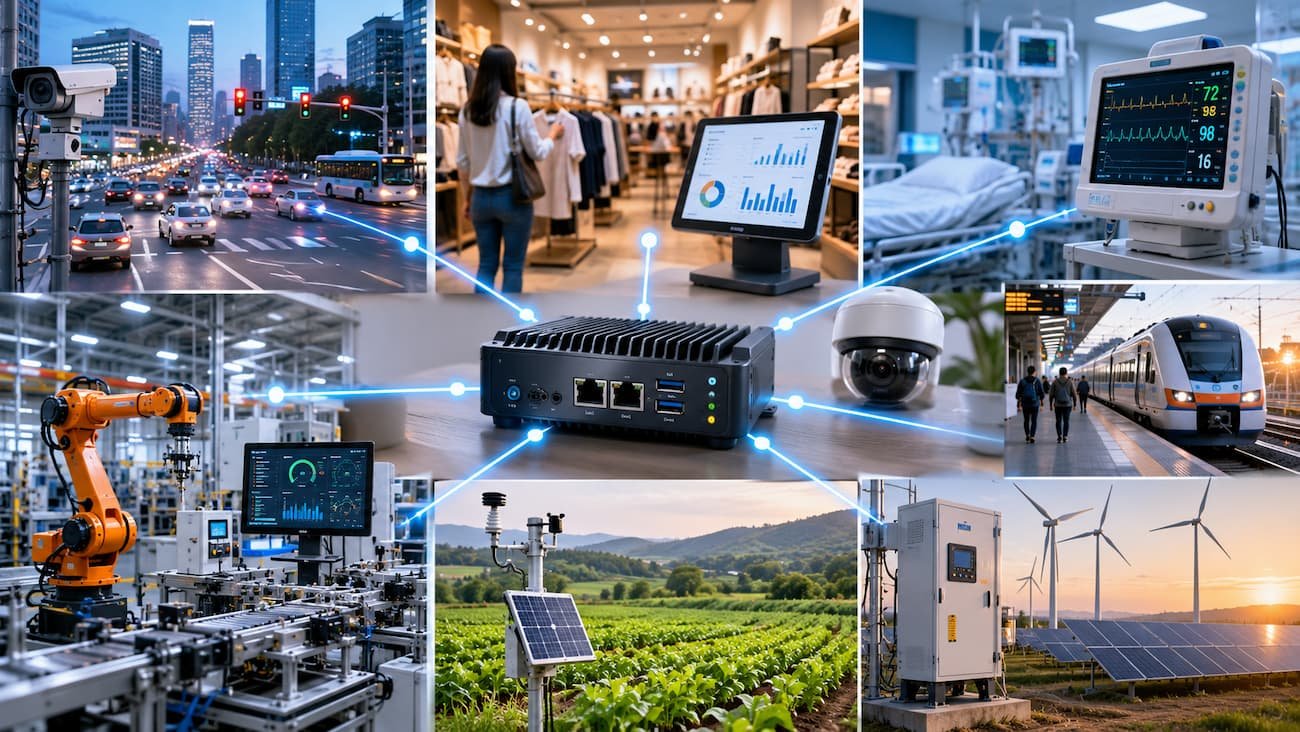
Manufacturing is one of the strongest examples of edge computing outside traditional low-latency applications. Modern factories use thousands of connected machines, sensors, and automated systems that constantly produce operational data. Sending all this information to a cloud platform can create unnecessary network demands. Edge computing allows factories to analyse machine data directly on-site, helping operators identify problems and improve efficiency.
For example, sensors attached to industrial equipment can monitor temperature, pressure, vibration, and energy usage. An edge system can detect unusual patterns and alert maintenance teams before a machine experiences a serious failure.
Benefits in Manufacturing
- Improves equipment monitoring.
- Reduces unnecessary data transfer.
- Supports predictive maintenance.
- Allows faster responses to production issues.
- Improves operational visibility.
Practical Manufacturing Example
Consider a production line where a machine normally operates at a specific vibration level. If sensors detect unusual movement, an edge computer can analyse the information immediately and notify technicians. The cloud may later store the data for long-term analysis, but the immediate decision happens locally.
Edge Computing in Healthcare Systems
Healthcare generates large amounts of sensitive data through medical devices, monitoring systems, imaging equipment, and patient records. Edge computing helps healthcare organizations process information closer to where it is created while improving efficiency and privacy. Medical devices such as wearable health monitors can collect continuous information about patients. Instead of sending every measurement to a remote system, edge processing can identify important changes and send relevant information to healthcare professionals. This is especially useful in situations where quick decisions are important or where reliable connectivity is not always available.
Healthcare Applications
| Use Case | How Edge Computing Helps |
|---|---|
| Patient Monitoring | Processes health data closer to the patient |
| Medical Devices | Enables faster device responses |
| Medical Imaging | Supports faster local analysis |
| Remote Healthcare | Improves reliability in distant locations |
Edge Computing in Retail and Customer Experiences
Retail businesses are increasingly using connected technologies to improve operations and understand customer behaviour. While faster responses are useful in retail environments, edge computing provides additional benefits such as better data management, improved inventory control, and more personalised experiences.
Modern stores often use cameras, smart shelves, digital displays, self-checkout systems, and inventory sensors. These devices generate continuous streams of information. Processing all this data in a distant cloud system can create unnecessary network traffic and reduce efficiency. Edge computing allows retail systems to analyse information locally. For example, smart shelves can detect when products are running low and immediately notify employees. The system does not need to send every sensor update to the cloud before taking action.
Retail Use Cases
| Application | Edge Computing Benefit |
|---|---|
| Smart Shelves | Monitors inventory levels locally and provides faster updates |
| Self-Service Checkout | Processes transactions and device information efficiently |
| Customer Analytics | Analyses store activity without transferring unnecessary data |
| Digital Signage | Updates content based on local conditions |
Another example is customer analytics. Retailers may use computer vision systems to understand store traffic patterns. Instead of storing every video stream permanently, edge systems can analyse activity locally and send only useful insights. Edge computing can improve retail operations, but organizations must still follow privacy regulations when collecting and processing customer information.
Edge Computing in Smart Cities
Smart cities rely on thousands of connected devices to manage transportation, energy, public safety, and city services. These systems generate huge amounts of data that cannot always be efficiently processed by central cloud systems alone. Edge computing helps cities make faster decisions by analysing information closer to where it is collected. This is useful for traffic management, environmental monitoring, and public infrastructure.
Smart Traffic Management: Traffic cameras and road sensors collect information about vehicle movement throughout a city. An edge system can analyse traffic conditions locally and adjust signals based on the current situation. For example, if one road becomes heavily congested because of an accident, nearby edge devices can help detect the problem and support faster traffic adjustments.
Environmental Monitoring: Cities can also use edge computing for monitoring air quality, noise levels, and energy consumption. Local processing allows authorities to receive useful information quickly without transferring every sensor reading to a central platform.
Edge Computing for Security and Surveillance
Security systems have traditionally depended on sending video and sensor data to central monitoring systems. However, the growing number of cameras and connected devices creates challenges related to bandwidth, storage, and response time. Edge computing helps security systems analyze information near the source. Instead of sending every video frame to a remote server, edge devices can identify important events and forward only relevant information.
Examples of Edge-Based Security Systems
- Smart cameras that identify unusual activity.
- Access control systems that process authentication locally.
- Industrial monitoring systems that detect unsafe conditions.
- Building security systems that continue operating during network problems.
This approach reduces unnecessary data transfers and improves efficiency. It can also help organizations protect sensitive information by limiting how much raw data leaves the local environment. However, edge security systems must still be properly protected. A compromised edge device can become an entry point for attackers. Regular software updates, strong authentication, and secure configurations are essential.
Edge Computing in Connected Vehicles
Connected vehicles are another important area where edge computing provides benefits beyond simple speed improvements. Modern vehicles contain many sensors that collect information about location, performance, safety, and surrounding conditions. A vehicle cannot depend entirely on distant cloud systems when making important decisions. Some information needs to be processed immediately inside the vehicle or nearby infrastructure.
Vehicle Applications
| Application | Edge Computing Advantage |
|---|---|
| Driver Assistance Systems | Processes sensor information locally |
| Vehicle Diagnostics | Analyses performance data immediately |
| Fleet Management | Improves monitoring of commercial vehicles |
| Traffic Communication | Supports interaction between vehicles and infrastructure |
For example, a vehicle safety system may need to analyze information from cameras and sensors immediately. Waiting for data to travel to a remote cloud server could delay important responses. Edge computing allows vehicles to make local decisions while still using cloud platforms for larger tasks such as software updates, historical analysis, and system improvements.
Edge Computing and Internet of Things Devices
The Internet of Things (IoT) is one of the most significant drivers behind edge computing adoption. IoT devices are found in homes, factories, hospitals, farms, and businesses. These devices continuously collect information from the physical world. Processing every IoT data point in the cloud creates challenges. Many devices have limited network connections, and sending large amounts of information can increase costs and reduce efficiency. Edge computing allows IoT systems to become more intelligent. Devices can analyze information locally, respond faster, and communicate important results instead of sending unnecessary raw data.
IoT Edge Computing Examples
- Smart home devices adjust settings based on local sensor information.
- Agricultural sensors monitoring soil conditions and equipment performance.
- Industrial machines detecting operational problems.
- Energy systems that manage local power consumption.
Challenges and Considerations of Edge Computing
Although edge computing provides many benefits, implementing it successfully requires careful planning. Moving processing closer to devices creates new technical and management challenges.
- Security Management: Traditional cloud systems often have centralized security controls. Edge environments may include thousands of distributed devices located in different places. Each device must be protected against unauthorized access and attacks.
- Maintenance Complexity: Managing many edge devices can be more difficult than managing a smaller number of central servers. Organizations need proper monitoring tools and maintenance processes.
- Limited Computing Resources: Edge devices usually have fewer resources compared with large cloud data centers. Applications must be designed carefully to work efficiently within local limitations.
- Data Management: Organizations must decide which information should be processed locally and which data should be stored in the cloud. Poor planning can increase costs and create unnecessary complexity.
| Challenge | Possible Solution |
|---|---|
| Security risks | Use encryption, authentication, and regular updates. |
| Device management | Use monitoring and automation tools. |
| Limited resources | Optimize applications for edge environments. |
| Data overload | Filter and prioritize information locally |
Best Practices for Using Edge Computing
Organizations should approach edge computing as part of a larger technology strategy rather than a simple replacement for cloud systems. A successful implementation requires understanding business needs, data requirements, and operational challenges.
- Plan Data Processing Carefully: Not every piece of information needs local processing. Identify which tasks require immediate decisions and which tasks cloud systems can handle later.
- Protect Edge Devices: Security should be included from the beginning. Use strong authentication, encrypted communication, secure software updates, and regular monitoring.
- Monitor Performance: Edge systems should be continuously monitored to ensure devices are working correctly. Performance tracking helps identify problems before they affect operations.
- Design for Growth: The number of connected devices often increases over time. Systems should be designed so new edge devices can be added without major redesigns.
Best Practice: The strongest edge computing strategies combine local intelligence with cloud-based storage and advanced analysis.
Conclusion
Edge computing is often introduced as a way to reduce delays, but its value extends far beyond low-latency applications. It helps organizations manage growing amounts of data, improve reliability, protect sensitive information, and create smarter connected systems. From factories and hospitals to retail stores, smart cities, vehicles, and IoT devices, edge computing is changing how technology interacts with the physical world. By processing information closer to where it is created, organizations can make better decisions while reducing unnecessary dependence on central systems.
The future of computing will not be only cloud-based or edge-based. Instead, successful systems will combine both approaches, using each where it provides the greatest advantage. Understanding these use cases helps businesses and technology users prepare for a more connected and intelligent digital environment.
FAQs
1. Is edge computing taking the place of cloud computing?
No, Edge computing and cloud computing often function together. Edge systems provide the things that are best done locally, but the cloud platforms give you large-scale storage, powerful analytics, and centralized management. Most modern technology environments are a hybrid of the two approaches.
2. What is the importance of edge computing for IoT devices?
IoT devices generate a significant quantity of data, and transmitting all of it to the cloud can cause wasteful network utilization. Edge computing allows devices to process vital information at the edge or on-site, making them more efficient, less expensive, and faster to respond.
3. Is Edge Computing Right for Small Businesses?
Yeah. Small businesses can take use of edge computing through smart devices, security systems, inventory tools and connected equipment. They do not always require heavy infrastructure investments, as many of today’s edge solutions come as managed services.
4. Is edge computing more private?
Edge computing can enhance privacy by enabling sensitive information to be processed nearer to its point of origin. But privacy is a design problem. Proper security controls and acceptable data practices are still needed by organizations.
5. What Industries Use Edge Computing the Most?
Edge computing is used widely in industries like manufacturing, healthcare, transportation, retail, energy, and telecommunications. These sectors benefit from processing massive amounts of data from linked devices and demand reliable operations.